
Blog
Press Release: March 18, 2026
Sweet Sounds: Dhirayta Scripture Songwriting Workshop
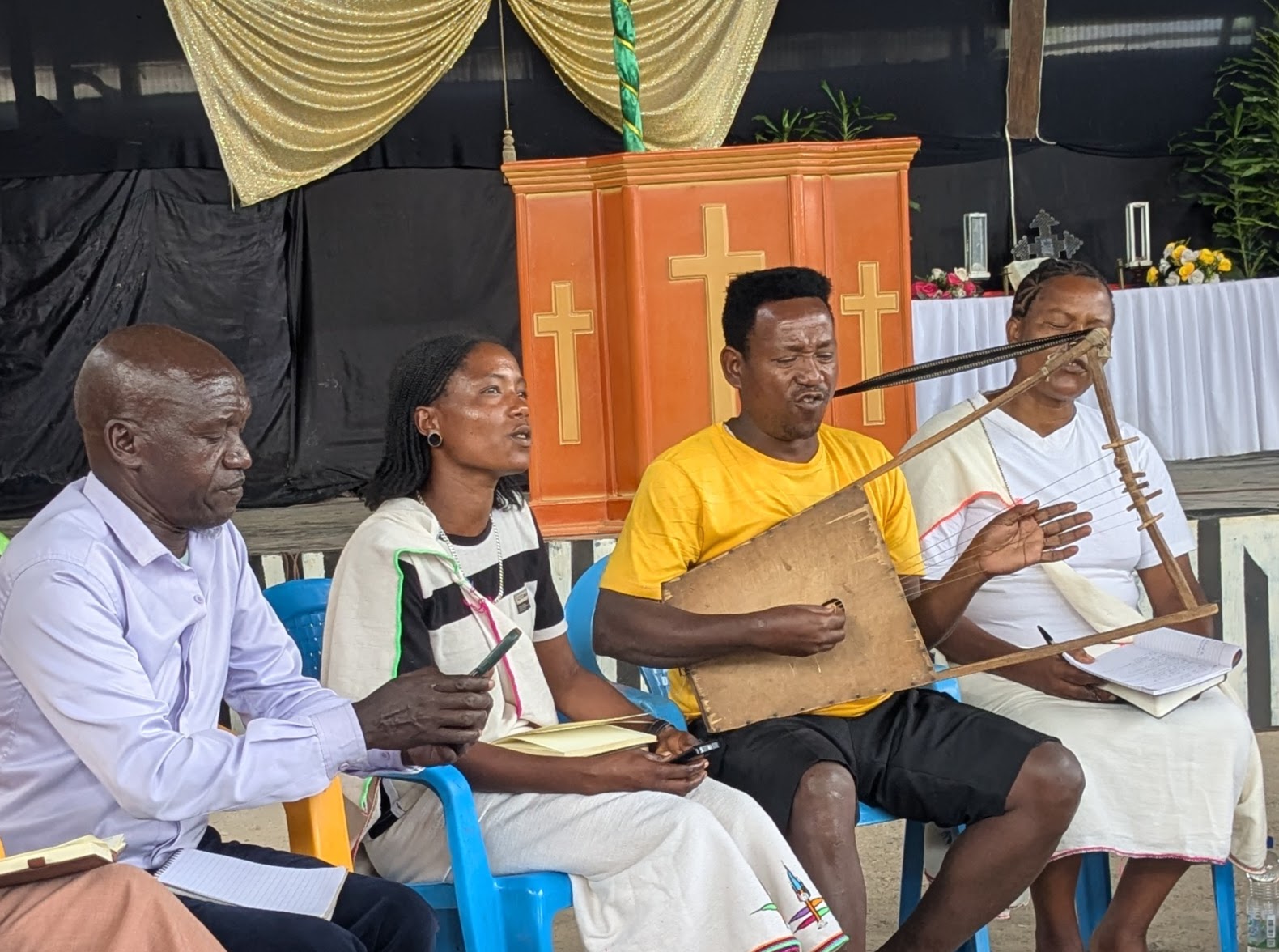
Earlier this month in southern Ethiopia, music began rising from an open church compound in Arba Minch.
Musicians carrying traditional instruments. Translators arriving with laptops full of draft Old Testament texts. Bibles in both Amharic and Dhirayta open on benches and tables. The setting was simple. The purpose was profound.
Dhirayta musicians and translators had gathered for a Scripture Songwriting Workshop led by Rob Veith, now serving with United Adoration, and Lukas Bröcker of Wycliffe Germany, who works alongside SIL Ethiopia. Rob has facilitated Scripture songwriting in more than 50 languages around the world. Lukas and his wife Hanna serve as translation advisors for the Koorete Bible Translation project in southwest Ethiopia. Together, they came not to perform, but to equip local believers with a reproducible, Scripture-centered tool they could carry forward.
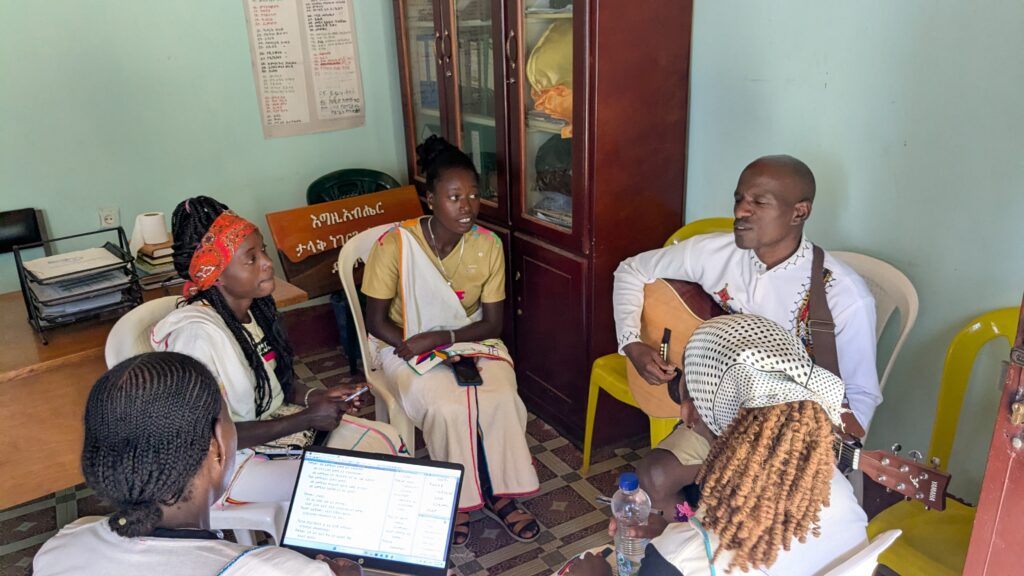
The Dhirayta Scripture Songwriting Workshop was hosted at Shecha Mekane Yesus Church. Though from a different denomination and language group, the congregation opened its doors completely. Visitors from the Dhirayta community near Gidole, about three hours away, set up camp on the church compound. Meals, coffee, tea, and snacks were lovingly prepared by a dedicated group of church women throughout the week. It was a quiet but unmistakable expression of Christ-centered hospitality.
“You Have 20 Minutes.”
The first assignment was focused and practical. Study a psalm. Find one verse that captures its central theme. Turn that verse into a refrain that can be sung between readings of the psalm.
After Lukas and one of the pastors modeled the refrain and reading pattern in Amharic, the participants divided into three groups.
Then came the unexpected instruction: “You have 20 minutes.”
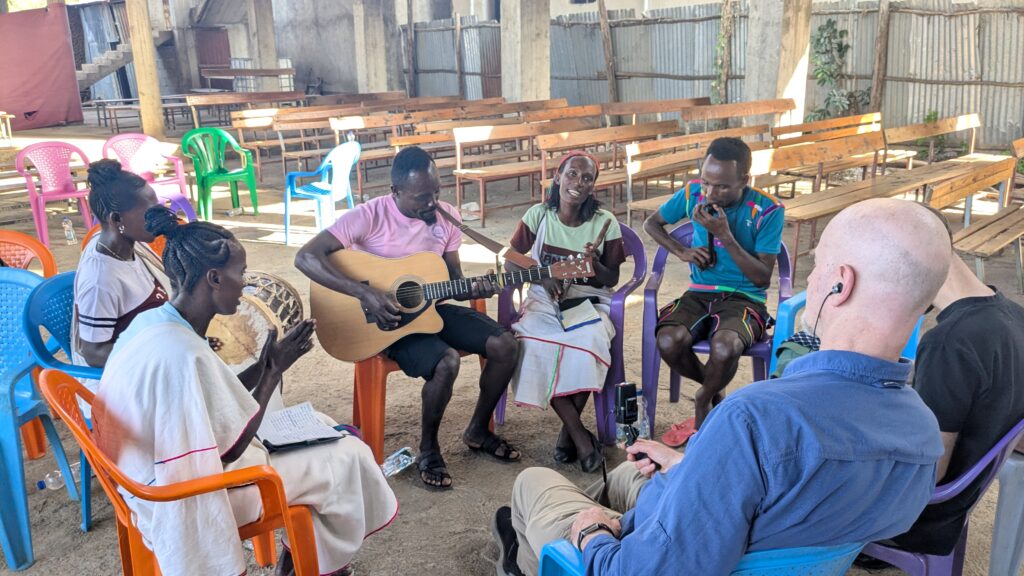
There was energy in the room. A sense of challenge. Instruments were tuned. Heads bent over Scripture. Conversations grew animated as groups wrestled with which verse best carried the heart of the psalm.
And twenty minutes later, something remarkable happened.
Each group crafted a new psalm refrain in Dhirayta, layered with harmony and traditional instruments. As they shared their songs, the joy was unmistakable. Soon, the whole room was singing along.
Music had been created before the first tea break.
That afternoon, the challenge deepened. Participants were invited to choose passages centered on worship, praise, and thanksgiving and to craft full worship songs rather than short refrains. Though working independently, all three groups selected the same passage: the Magnificat in Luke 1.
In breakout rooms, melodies were tested, harmonies layered, and lyrics refined with care. The text was not treated as background material. It was read closely, discussed deeply, and allowed to take root before it was ever set to music.
As the workshop was ending for the evening, one of the participants came to talk to the leaders. “We know the Old Testament very well,” he said. “We have lots of stories and songs about OT themes. I don’t think we need more psalms. What we want is more songs about Jesus!”
By the end of the first day, seven brand-new Dhirayta songs had been recorded using a simple, high-quality handheld device. The work of the day was preserved so that melodies would not be forgotten and shared organically through churches and communities.
“We Want More Songs About Jesus.”
As the day came to a close, one participant approached the leaders with a thoughtful observation.
“We know the Old Testament very well. We have many stories and songs about those themes. What we want is more songs about Jesus.”
That comment shaped the next day’s work.
Beginning early with participatory discussion about what the community most needed, three themes emerged clearly: repentance and forgiveness, unity and peace, and the End Times. Groups returned to their Bibles and began writing. When the repentance song was performed, many in the room were moved to tears.
In the afternoon, the workshop turned to narrative songwriting, something entirely new for the Dhirayta. Three New Testament stories were chosen: the Parable of the Prodigal Son, Zacchaeus, and the Birth of Jesus.
The process was more complex. Should the melody come first, with words shaped to fit? Or should the text of Scripture lead, with music formed around it?
One participant reflected, “I used to struggle trying to write a good melody and then fit the words into it. Now I can open the Bible and find good words there, and then discover the melody that goes with them.”
Another commented, “We expect the preachers to read deeply in the Bible. Now we see that songwriters must do that too.”
That shift matters. When songwriters engage Scripture deeply, what emerges is not just a song about the Bible, but a song formed by it.
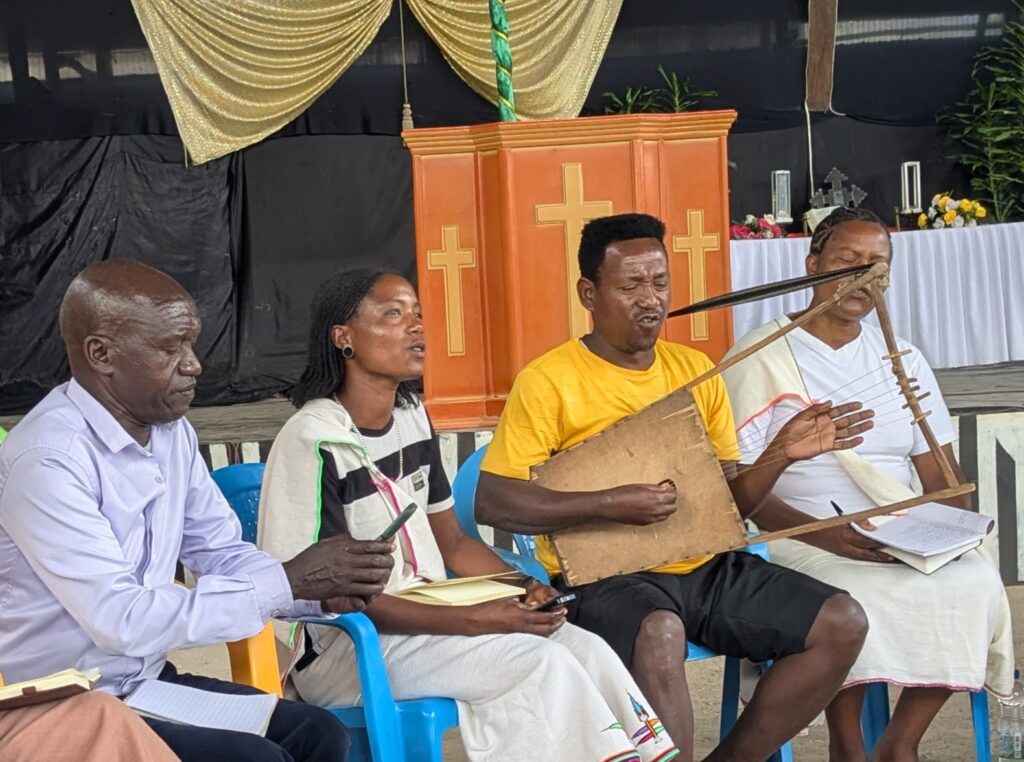
“His Love Is So Wide.”
By the next morning, the group writing about the Prodigal Son presented their finished piece. Each verse progressed through the younger son’s story. After every stanza, the chorus called listeners home: “Let us come back to the Father. His love is so wide.”
The group writing about the Christmas story wrestled intensely. At one point, they had nine verses and were unsure what parts of the narrative to include. With guidance from Rob, Lukas, and other musicians, they refined their work.
When they sang the angel’s proclamation, “Our Savior has been born,” the room responded with joy.
By the final morning, the group’s devotion time included singing one of the newly created songs together instead of an Amharic hymn. There was an extended question and answer session, ranging from culturally appropriate dance and instrumentation to practical discussion about starting with lyrics versus melody. Before departing, participants practiced teaching the method to one another, ensuring that the process could continue beyond the workshop.
This workshop was never only about producing songs.
It was about placing a sustainable, Scripture-centered tool into the hands of local believers. Open the Word. Study it closely. Listen for its heart. Shape it into song. Then teach others to do the same.
The Word is not only being translated into Dhirayta. It is being read and studied deeply, sung faithfully, and carried into the life of the church through melody. Scripture meets people in the words they understand and now, in the songs they sing.
Recently, Pastor Todd from Hales Corners Lutheran Church in Hales Corners, Wisc., told this story as part of his message. Watch the video to see his description of the songwriting workshop. It begins at the 16:06 mark.


Leave a Reply
You must be logged in to post a comment.